

Watch a sample episode now
In this Spotlight, we will explore how our planet works and how Earth scientists are deepening our understanding of the powerful forces that shape the Earth and the way we live on it. Led by volcanologist Professor Eliza Calder from the University of Edinburgh, this Spotlight dives into natural hazards, volcanoes, and disaster risk reduction. You’ll discover how Earth scientists study volcanic eruptions, how their research supports decision-making, and how social and scientific factors combine to address the complex challenges of volcanic risk. Ultimately, this Spotlight reveals that studying Earth sciences is about far more than rocks - it’s a fascinating, dynamic field that empowers us to understand our changing planet and make informed choices about how society can thrive on it.
Eliza CalderUniversity of EdinburghEnvironmental and earth sciences
All episodes

1. Introduction to earth sciences, natural hazards, and risk

2. Fundamental scientific understanding of hazard processes

3. Guatemala: Showing how applied hazard science and interdisciplinary understanding of risk contributes to disaster risk reduction (DRR)

4. Understanding the complexity of disaster response
About the university
University of Edinburgh
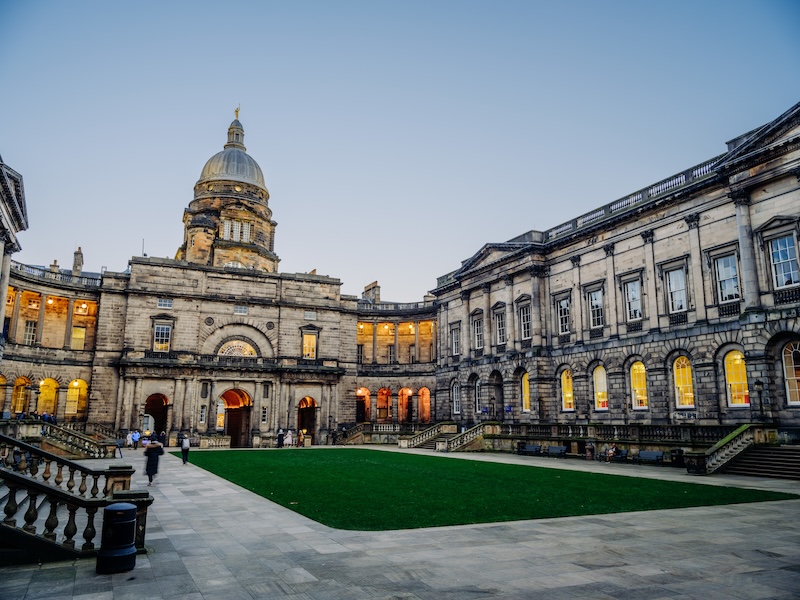
The University of Edinburgh is part of the prestigious Russell Group, and is consistently ranked in the world's top 50 (Times Higher Education World Rankings). For more than 400 years, they’ve influenced the world in extraordinary ways - expanding the depth of human knowledge and improving the lives of people worldwide. Research conducted here led to the discovery of chloroform anaesthesia, the Higgs boson particle, and in-vitro fertilisation, to name a few. Embracing innovation and entrepreneurialism, and encouraging their community to push the frontiers of knowledge today, helps ensure they make a positive, sustainable mark on the world tomorrow. Could you be part of that idea too?
University of Edinburgh profile →Meet the academic

Eliza Calder
Eliza’s research is in the area of volcanology, studying the physical nature of volcanic processes, undertaking volcanic hazard and risk assessments, and also developing better approaches to volcanic disaster risk reduction by working with communities at risk. Eliza employs a combination of approaches to study volcanic phenomena including: (1) field-based studies of volcanic deposits in order to infer emplacement mechanisms; (2) laboratory analog experiments to study simplified systems in a controlled environment in order to elucidate the controlling parameters; and (3) application of computational models to recreate conditions of past events and forward-model for investigating potential future hazards. Much of her work on applied volcanic hazard and risk reduction involves interdisciplinary collaborations with colleagues from across the fields of maths and engineering, and social sciences, and humanities. Aspects of this work involve application of the outputs of volcanic hazard research to active volcanic systems, which is undertaken in collaboration with volcano observatories or government institutions responsible for the mitigation of volcanic hazards. Eliza’s work with colleagues from social sciences and humanities focuses on how dialogue between scientists and those with lived experiences and local knowledge of volcanic risk can provide benefits in both directions.

In every Subject Spotlight you’ll find

On-demand interactive video content
Sign up, log in and access a wide range of potentially life-changing Subject Spotlight experiences that will help you make informed decisions about your university future.

Remarkable & relatable academics
Learn from some of the UK’s finest and most decorated academics as they give you a genuine, insightful and engaging experience of studying their courses at their universities.

Interactive quizzes and activities
Have a go at fascinating interactive quizzes and activities, then get meaningful and intuitive feedback from the academics to see how you’ve done.

Content to enhance students’ personal statements
Hear direct from the academics what’s expected of you in your personal statements, and the things you can do to improve your chances of getting on the course you most desire!

Certificate of completion
You’ll receive a certificate of completion to evidence your learning - why not add this to your CV and university applications to show your dedication to your future pathway!