

Watch a sample episode now
In this electrifying experience, Dr Ann Rajnicek explores the world of bioelectricity and its part in the human body. In episode one, Ann explains bioelectricity, discusses ion movement in cells and tissues, and shows how epithelia like skin acts as measurable 'batteries.' Ann then explores what happens when that battery is disrupted by injury, how scientists map and decode wound currents, and why understanding the ions involved could lead to new ways to boost healing.
In episode two, Ann explores how the body’s natural electrical signals guide cells into wounds, helping them move to the right place and switch into repair-friendly roles. She then shows how boosting those signals can speed healing, why some animals regenerate limbs using injury currents, and how electrical stimulation is being combined with other treatments to improve nervous-system repair.
In episode three, Ann traces the history of bioelectrical therapies, looking how early experiments led to a Frankenstein phenomenon of 'reanimating corpses'. Ann then discusses how modern electrophysiology and planarian regeneration research have reclaimed bioelectricity as real biology — and how that knowledge now powers evidence-based therapies and future technology. In the final episode, Ann recaps the science of bioelectricity before setting you an activity that asks you to conduct some research and compile your findings on what impact Parkinson’s disease has on the electric signals in the body, and how we can tackle it.
Dr Ann RajnicekUniversity of AberdeenBiomedical sciences
All episodes

1. An introduction to bioelectricity

2. Bioelectrical control of healing and regeneration

3. Science fiction to science fact: bioelectrical therapies in practice

Activity: Bioelectricity in action
About the university
University of Aberdeen
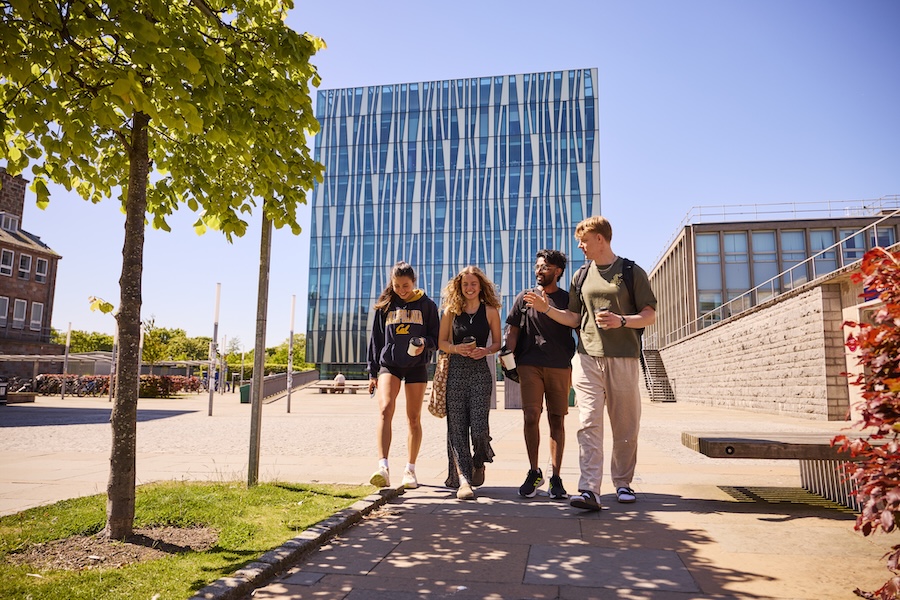
At Aberdeen, we’ve been going beyond expectation and tradition since 1495. Our students join a vibrant, global community making significant contributions to society – from revolutionising healthcare and transforming digital infrastructure to tackling climate change and creating a more sustainable world. Our research knows no boundaries: the first full-body MRI scanner was built here, and an Aberdeen graduate co-discovered the lifesaving medication insulin. We empower our graduates to think critically, collaborate widely, and innovate across disciplines and perspectives. Here, there are no limits to your ideas or to the difference they can make.
University of Aberdeen profile →Meet the academic

Dr Ann Rajnicek
Dr Ann Rajnicek studied her undergraduate degree in Detroit Michigan, where she received a BSc (magna cum laude; Biology major, Chemistry minor) from Marygrove College. She then moved to Purdue University in West Lafayette, Indiana, for her PhD studies, where she first encountered the concepts of bioelectricity that lie at the interface of developmental biology, physics, and physiology disciplines. Alongside her postgraduate research work at Purdue, Ann was a teaching assistant in several undergraduate courses. After receiving her PhD (in Developmental Biology) she moved to Aberdeen to continue her research into the role of bioelectricity in wound repair and regeneration. Having only planned on staying for three years, Ann fell in love with Aberdeen and has been here for more than 30 years. Ann is now a Senior Lecturer and the Programme Coordinator of the Biomedical Sciences undergraduate degree. She is also supporting students as a Senior Personal Tutor for the School of Medicine, Medical Sciences, and Nutrition.

In every Subject Spotlight you’ll find

On-demand interactive video content
Sign up, log in and access a wide range of potentially life-changing Subject Spotlight experiences that will help you make informed decisions about your university future.

Remarkable & relatable academics
Learn from some of the UK’s finest and most decorated academics as they give you a genuine, insightful and engaging experience of studying their courses at their universities.

Interactive quizzes and activities
Have a go at fascinating interactive quizzes and activities, then get meaningful and intuitive feedback from the academics to see how you’ve done.

Content to enhance students’ personal statements
Hear direct from the academics what’s expected of you in your personal statements, and the things you can do to improve your chances of getting on the course you most desire!

Certificate of completion
You’ll receive a certificate of completion to evidence your learning - why not add this to your CV and university applications to show your dedication to your future pathway!