

Watch a sample episode now
In this fascinating experience, Dr Alexander Lorenz explores the building blocks of life. In episode one, Alexander will guide you through the world of cell division, explaining how cells grow, reproduce, and maintain our bodies. Alexander will also introduce the key features of cell division, including the organisation of DNA in chromosomes, the process of semi-conservative DNA replication, the role of enzymes such as DNA helicases and polymerases, the formation of sister chromatids, and how the cohesin complex holds these structures together to ensure accurate division.
In episode two, Alexander explores the cell cycle and mitosis, explaining how cells grow, replicate their DNA, and divide accurately. He covers the phases of mitosis and the key mechanisms that ensure chromosomes are properly segregated during this process. He also highlights how checkpoints and regulatory proteins, such as cyclins and CDKs, protect against errors that could lead to problems, including cancer.
In episode three, Alexander introduces the process of meiosis and its role in sexual reproduction. He explains how processes like recombination and independent assortment generate genetic diversity, before highlighting the evolutionary advantages of diversity for adaptation and species survival.
In the final episode, Alexander recaps the key facts of cell division, mitosis, and meiosis. He also discusses the cohesin complex before setting you an exciting activity that puts you in the shoes of a research scientist and asks you to answer a series of questions based on your findings!
Dr Alexander LorenzUniversity of AberdeenBiology
All episodes

1. An introduction to cell division

2. Cell cycle & mitosis

3. Meiosis & sexual reproduction

4. Activity: researching the cohesin complex
About the university
University of Aberdeen
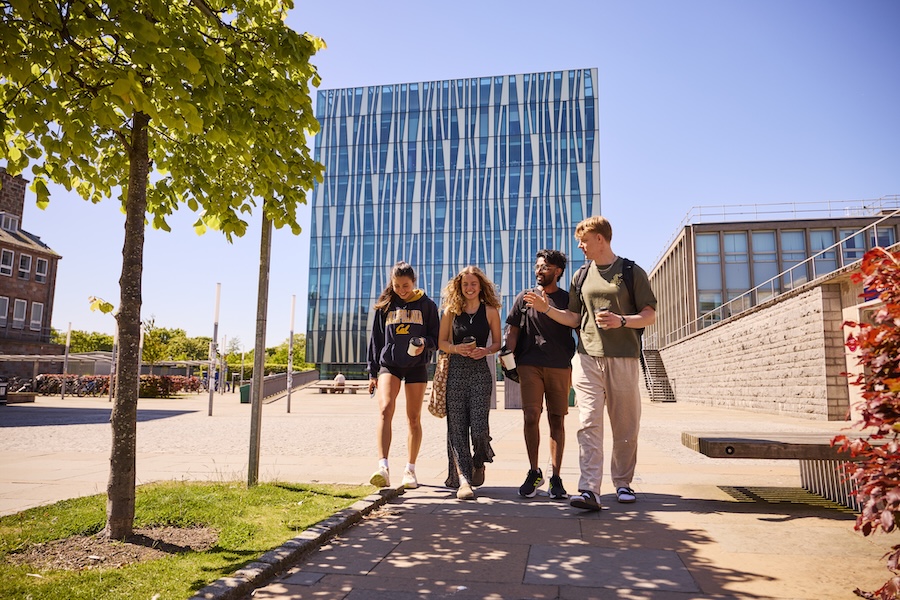
At Aberdeen, we’ve been going beyond expectation and tradition since 1495. Our students join a vibrant, global community making significant contributions to society – from revolutionising healthcare and transforming digital infrastructure to tackling climate change and creating a more sustainable world. Our research knows no boundaries: the first full-body MRI scanner was built here, and an Aberdeen graduate co-discovered the lifesaving medication insulin. We empower our graduates to think critically, collaborate widely, and innovate across disciplines and perspectives. Here, there are no limits to your ideas or to the difference they can make.
University of Aberdeen profile →Meet the academic

Dr Alexander Lorenz
Dr Alexander Lorenz is originally from Vienna, Austria where he studied Botany and Genetics at the University of Vienna, later gaining his PhD in yeast cell biology. As an undergraduate and as a PhD student, he also spent time studying in Germany and Switzerland. After his PhD, he moved to the University of Oxford to work as a postdoctoral researcher for a few years specialising in yeast molecular genetics. He is now a research group leader and senior lecturer at the University of Aberdeen. His research focuses on how genetic diversity is generated and he currently teaches molecular biology, genetics, and microbiology to undergraduate and masters degree students.

In every Subject Spotlight you’ll find

On-demand interactive video content
Sign up, log in and access a wide range of potentially life-changing Subject Spotlight experiences that will help you make informed decisions about your university future.

Remarkable & relatable academics
Learn from some of the UK’s finest and most decorated academics as they give you a genuine, insightful and engaging experience of studying their courses at their universities.

Interactive quizzes and activities
Have a go at fascinating interactive quizzes and activities, then get meaningful and intuitive feedback from the academics to see how you’ve done.

Content to enhance students’ personal statements
Hear direct from the academics what’s expected of you in your personal statements, and the things you can do to improve your chances of getting on the course you most desire!

Certificate of completion
You’ll receive a certificate of completion to evidence your learning - why not add this to your CV and university applications to show your dedication to your future pathway!